The Body As An Archive: Disabled Relationality is Liberating
on the devastation of m.e., chronic pain as my body’s demand for the care i always deserved, the liberating impact of disabled relationality, and self-care as a militant commitment

cw: nondescript mentions of death due to m.e. and ableism, mentions of money. please expect typos due to my limited capacity to write and edit
THE DEVASTATION OF MYALGIC ENCEPHALOMYELITIS
I long to write about something beautiful. But with the amount of pain I am in — faced with a daily onslaught of symptoms that have rendered me mostly bedbound for nearly two full years — all I can think about is how to withstand the next second, then the next one, one at a time.
Severe Myalgic Encephalomyelitis is particularly devastating as a multi-system illness because it erodes your capacity to handle stimuli in which even minimal movement, light, clothes, touch, conversations, thoughts, emotions, or sounds can be enough to trigger post exertional malaise (a defining character of M.E. defined as a “worsening of symptoms following even minor physical or mental exertion”). In addition to debilitating, unending pain and brain fog, the spectrum of my daily symptoms include feverish disorientation, the inability to sit up, chew or swallow, extreme weakness, migraines, nausea, nightsweats, flu-like symptoms, and paralysis in which I am confined my bed in darkness and silence to maintain my baseline, reliant on full time caregiving support to meet my basic needs. During PEM, I am unable to make it to my bathroom just next door despite the help of my mobility aid, at the mercy of whatever contortion I found myself in before PEM struck. This is just a glimpse (albeit a small one) into my daily life. I think of my comrades with M.E. more severe than my own who are entirely “bed”/hospital-bound, reliant on IV fluids and feeding tubes, neglected by medical research, abandoned by so-called community and providers alike, without the care and understanding they deserve, or otherwise left to die. This is especially horrifying considering how those most disproportionately affected by disability — Black and brown working class, femmes and colonized peoples everywhere — face the most barriers accessing support due to systemic racism, classism, misogyny, and misogynoir. However you’re able: learning and sharing information about M.E., uplifting our experiences (especially the experiences of our Black and brown comrades), masking, engaging with our mutual aid requests, or donating to research, helps to lessen the burden of labor on those navigating this debilitating disease.
Rest scarcely exists for those who suffer from severe M.E.; we have survival or we have death, with little rest in between. The erotic, sacred power I used to find in everyday pleasures have been lost at the border between the world and my sickbed. I can barely remember the embrace of wind or the touch of the sun. I’ve been forced to spend many months tirelessly in pain, in a room with closed blinds, further darkened by eye coverings, suffocated by silence, in a feverish paralysis yet fully aware, unable to handle light, listening to music, writing, reading, or watching films to cope. Even the sensory consequences of wearing a shirt causes me neck pain so debilitating, my muscles have started to lock due to tension.
And yet, what I am learning from becoming disabled, what I am forced to learn after a lifetime of self neglect: no one was meant to survive alone. I have always been deserving of care, which my body will demand on my behalf with incapacitation too severe to be ignored for as long I deny this. I do not need to be “well” to be loved, and neither do you. We need each other’s grief and rage. What life do you ache for? Beginning to answer this question is how we create a world capable of transmuting our collective wounds into liberation.
Even still, we deserve to learn from sources other than grief and hurt — sometimes feeling our pain is the most we can do, and even acknowledging its presence can be a challenge. Relief, joy, care (or what we can imagine of them) are valuable teachers too.
THE BODY AS AN ARCHIVE
To grow up as the eldest daughter in a household with only my brother and father post-divorce, was to be a mother, not a child, to my parent and sibling alike. To grow up as the only woman of color between the three of us was to be taught from a young age that my body was not mine, but rather a thing to give away in the name of care, in service to friends, or family, whose wellbeing I believed mattered more than my own.
After years of operating from these self-betraying beliefs, failing to accept or ask for the care I needed, functioning as an emotional caregiver for both of my parents, while simultaneously (unconsciously) reproducing these dynamics among even friends — my body had finally had enough.
As a somatic response to a lifetime of stress, trauma, and unmet needs, I developed multiple chronic illnesses and now require full time caregiving support. It was as if my body became my advocate, demanding on my behalf the care I have always deserved in the form of pain and incapacitation so severe it can no longer be ignored by myself or others.
THE LIBERATING IMPACT OF DISABLED RELATIONALITY
Ironically, since becoming chronically ill, my relationships are healthier than they’ve ever been, in which boundaries have been set and conversations around our mutual needs, capacity, and desires are prioritized. Together, we relearn what it means to rest. We allow ourselves to be held at our lowest capacities, when language is an impossibility, and company is all we can offer, becoming less and less afraid to be seen in these moments each time.
Even still, it wasn’t long ago when I felt the need to disclose to my partner that my medical bills — which would become ours — will likely only continue to grow. I had been finding it increasingly hard to cope with the thought of not knowing how “much” — by classist, capitalistic, and ableist standards — I could contribute financially to our life together. With full sincerity and no hesitation, she turned to me and asked, “do you not imagine me in your future?” There I was, in my sickbed, probably eating a meal she’d made us happily, so stressed about what I couldn’t do that I failed to consider what I could ask others for, and the ways my partner wants to show up for me. I was still imagining myself struggling in isolation despite the love I have in my life now and the very future we are organizing towards.
Disability queers all our relationships because disabled lifeways and survival strategies expand profoundly upon the narrow models of care colonialism has imposed upon us.
We were born into this world with a sun and a neighbor. Needs were never ours to hold alone. Mutual aid is intended to be a network of care and redistribution that we are mutually a part of. A practice and structure that reaffirms our commitment to one another simply because we exist
I have become vicious and angry, but not nearly as audacious and wicked as I should be. Unable to be a worker, a wife, or a mother by conventional standards, as an asexual and aromantic femme, who later became severely disabled by gendered racial violence — capitalism and ableism would consider me “deadweight.” And yet, I am loved exactly as I am (fiercely, wholly) by my friends, my partner, the sun, her forests, and oceans, who’ve created a world with enough room for all of us, with an abundance of medicine to meet our needs that will only be made accessible as we liberate ourselves and the land.
I do not wish to be well in a sick society. My disabilities are an honest, natural response to living under a world that has normalized the exploitation and suffering of myself and that of the global majority — our bodies carry the knowledge that this is not how we were meant to live.
Disabled, queer existence is proof that all standards of value assigned to us by white supremacy, cisheteropatriarchy, and capitalism are illegitimate because they require constant violence to maintain themselves. We terrify our enemies because our liberation illuminates the limitations of the very cage they live inside. To face us is to face the ways they have already been dominated by the systems of power they lust to master.
One of the most insidious functions of ableism is that we are taught to doubt and minimize our suffering. Colonialism, white supremacy, cisheteropatriarchy, and capitalism benefit from us being disconnected from our anger, grief, and pain because this makes us more susceptible to exploitation and less likely to resist — our emotions are messengers, and are often our bodies most immediate ways of telling ourselves or others that we deserve justice, attention, care, or that some circumstance needs changing.
For the same reasons no one is exempt from becoming disabled, no one is exempt from needing rest. To materialize the liberated future we dream of, we cannot be undeserving of the grace and care we seek to extend to our comrades. Disability justice is central to collective liberation, because it understands no one should be left behind. And the longer we survive, the more fight we have for all of us. Helping each other to access rest is a necessity. This is a structural struggle which not only requires us to assess our personal capacities, intentionally delegate labor, uplift and compensate the work of our Black and brown comrades, but actively involve ourselves with creating material circumstances that enable rest (particularly for our most marginalized comrades) to each of our own abilities.
Liberation survives in us. My sickbed has become my altar, my site of protest, prayer, and solidarity: the first time I became bedbound due to pain was compounded by the stress of witnessing israel’s genocide against Palestinians in real time. Our bodies quite literally ache for liberation.
With every moment I am forced to reckon with my loss of capacity due to disablement, I am reminded of the livelihood stolen from those currently experiencing genocide, including countless Sudanese, Congolese, and Palestinian people actively resisting land theft, starvation, extraction for profit, enslavement, and eradication. Genocide entails mass-disablement for oppressed and colonized peoples. Rest has always been a site of political warfare. It is crucial that we answer to the mutual aid requests of our comrades globally, uplift their liberatory efforts, and support their right to self-determination by any means they deem necessary. Being bedbound has taught me that care is a vessel capable of crossing all imposed borders. It is an act of self/collective preservation, because no amount of marginalization and subjugation from society is capable of erasing our commitment to each other which I feel in the love from my disabled friends. Often, the most loving act of solidarity is tending to a person’s needs as they free themselves.
What I have learned the hard way is that the world will not stop for us. For myself and other femmes of color, caring for ourselves is a practice we have to fiercely protect, leaning on others to help us do the same — a reality that is only exacerbated for our Black and brown comrades globally. Finally feeling and acknowledging my grief is what led me to community capable of holding me, because every ache I’d ever felt was also theirs. Organizing is not an abstract political theory. It starts with each of us in the most inner working of our intimate lives. How does our politic inform how we navigate our personal relationships and come home to ourselves? In the words of Audre Lorde, if livelihood is what we seek, “every woman has a militant responsibility to involve herself actively with her own health.” The liberated future we dream of already lives inside each of us, and we deserve the care and protection needed to set it free. In a society dependent on our exploitation, this requires militancy, which is a commitment no one should have to face alone.
For all the years I neglected myself in ways I would never hope to forgo my friends, I wish to become my own daughter — she has my same name and my same needs, and I would do anything to protect her.
I may not know you but I love you — as in, your liberation is my liberation. I would live and kill for the both of us.
to support the resistance and survival efforts of black, brown, and colonized peoples throughout the globe, contributing fvndz directly to individuals on the ground in sudan, congo, and palestine is a critical act of solidarity. organizations and non-profits often exist to uphold neo-colonialism. the politics of mutual aid remind that our collective liberation is the result of our mutual commitment to the material struggle needed to set us free
COMMUNITY ORGANIZED EFFORTS TO SUPPORT:
- Haboba’s House (Sudan)
- Gaza’s Roots (Gaza Strip)
- Sudan Solidarity Collective (Sudan)
- Nas Al Sudan (Sudan)
- Darfur Women Action Group (Sudan) | nonprofit
- Hope and Haven Refugees (Sudan) | nonprofit
ACCOUNTS TO ENGAGE WITH AND UPLIFT:
- @/congofriends on Instagram
- @/bsonblast on Instagram
- @/sudanisnotafootnote on Instagram
- @/focuscongo on Instagram
- @/muchachafanzine on Instagram
- @/decolonizesudan on Instagram
- @/disorientalizing on Instagram
- @/darfurwomenaction
- @/seastersjones on Instagram
- @/sudaneseresistancefront on Instagram
- @/sudansolidaritycollective on Instagram
- @/sudan.updates on Instagram
M.E. & LONG COVID RESEARCH & ACCOUNTS TO SUPPORT:
- DecodeME (@/decodemestudy on Instagram)
- The Sick Times (@/thesicktimes on Instagram)
- ME Action Net (@/meactnet on Instagram)
- Long COVID Justice (@/longcovidjustice on Instagram)
- Expert of ME (@/expert.of.me on Instagram)
- Sammy (@/m.e_and_more on Instagram)
for those who would like to support me monetarily, my v 3 n m 0 & c a s h a p p are solenneh. as a severely disabled femme who is otherwise unable to work, all fun/dz will go towards my medical bills and compensating those in my careweb. thank you dearly
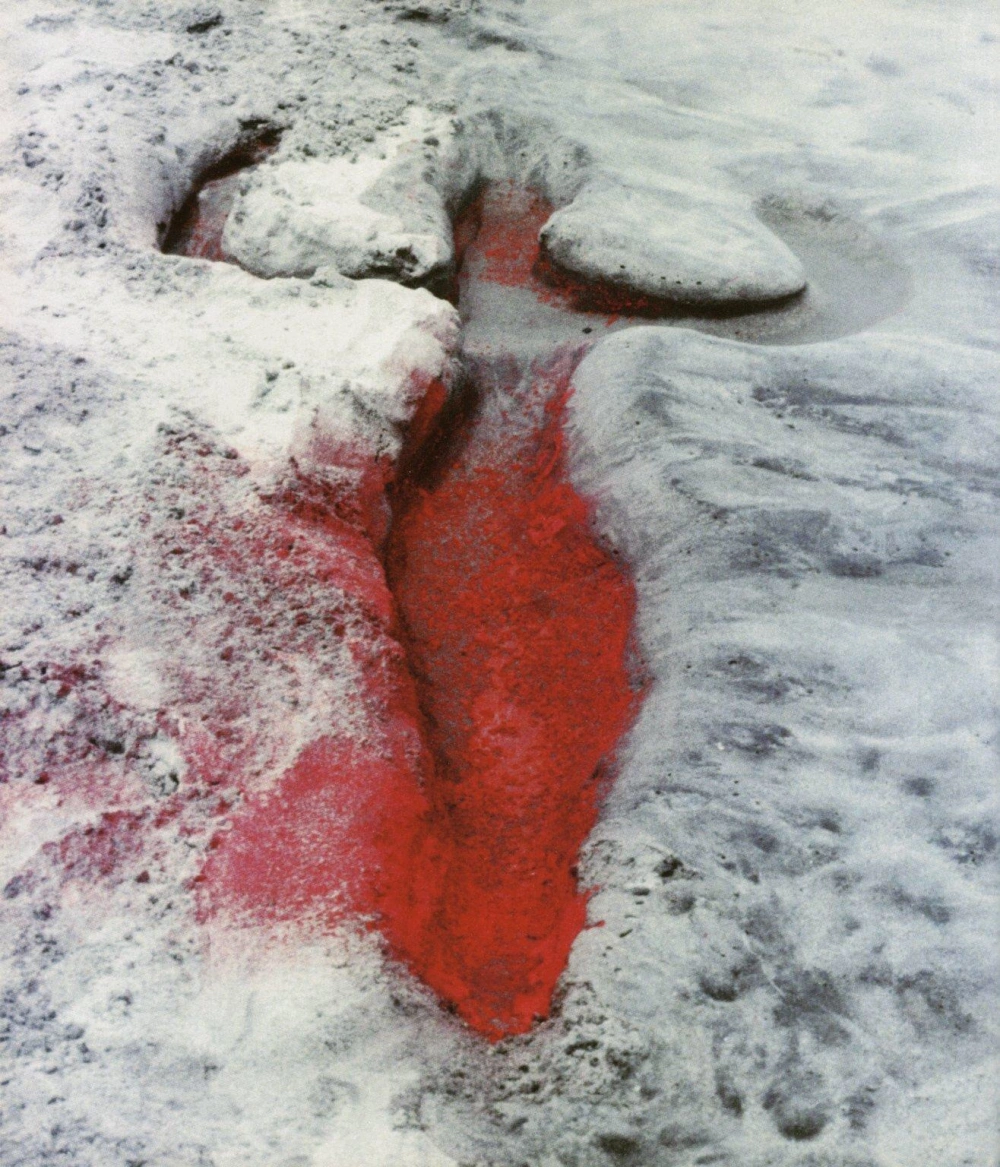
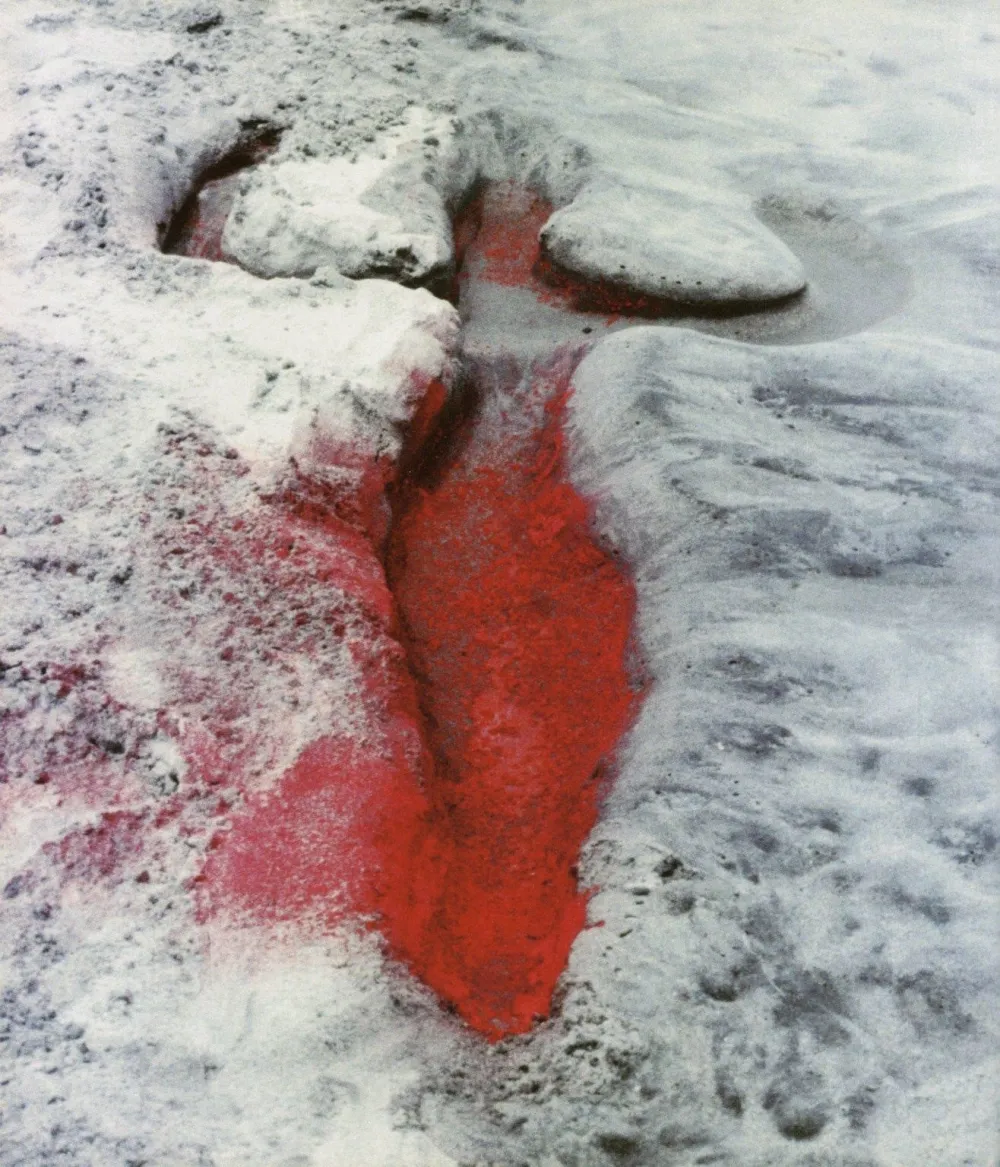
Photograph: Untitled: Silueta Series, Mexico, 1976 Photograph © The Estate of Ana Mendieta Collection, LLC,Courtesy Galerie Lelong, New York