For Daughters Like Me
on experiencing covert incest & childhood sexual abuse, recovering half memories, healing from harm i can’t remember fully, and coming home to my body

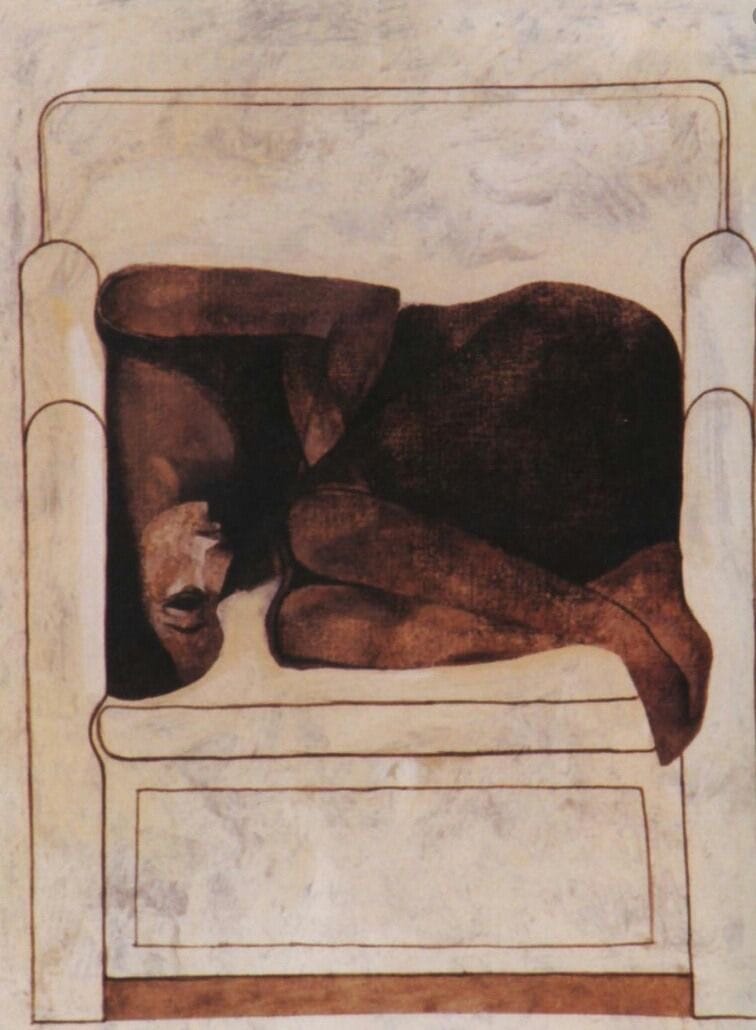
cw: descriptions on the lasting impact of experiencing childhood sexual abuse, covert sexual abuse, and emotional incest, along with brief examples of what these forms of abuse can look like. i’m sending love to each of you and holding us all so close
You may find there is no language to explain what has been done to you. So instead, your body will find some way to try to speak: exhaustion, aches, nightmares, hyper-vigilance. In the shower, and your bedroom, you remain tense in the company of even yourself, constantly bracing yourself for an intrusion, under the watch of a hungry gaze you have learned to fear is always there.
The burning in your body when they are near. Your stomach sick with all the words you want to scream. How badly you want to fold into yourself until you are gone completely. What you would do to become bigger and stronger than they are. Longing to be soft, yet still safe.
The grief is heavy enough to make you sick. Enough to make your bones shake. You are vigilant even in spaces you shouldn’t have to be. Daughter, you do not need a memory to prove that you were harmed. I believe you.
We do not owe our experiences to anyone. You are still allowed to want to know what was done to you. The only person who has any right to access these memories, is you.
Daughters are constantly expected to prove how we were harmed. Rage, grief, humiliation, dissociation — this is already proof enough that we deserve tending to.
Daughter, you are the altar, not a sacrifice. Memories are not a prerequite for healing. We were born into this world being worthy of good things.
I first heard of the term “covert incest” was when a video on suspecting but not remembering sexual assault landed across my for you page.
Covert incest, which manifests as enmeshment, is roughly defined as non-physical sexual abuse where a parent positions a child like they would a spouse or another adult, crossing “physical, sexual, or emotional boundaries” with specific examples described here and in the resources at the bottom of this essay. Covert incest, however, is only one example of covert sexual abuse.
My hands had begun to shake. Everything I read online affirmed what my body had known long before my mind could believe it.
You do not need to be touched to be violated: sexualizing comments, lewd looks, sexually suggestive behavior, being exposed to sexual situations, unwanted nudity, guilt trips, manipulation…
I understood instantly that I had finally found language capable of holding the humiliation, repugnance, discomfort, exhaustion, grief, and anger I’d harbored towards my father all these years. Most of my memories of home stop after my mother moved out following the divorce of my parents around seven. This was also when my dad’s possessiveness of me seemed to fester.
Experiences I’d been unable to recall in even therapy began returning to me, suddenly, all at once. As if washing to shore after a shipwreck: with a bitter mouth full of salt, I was tattered, burning, but still — reaching land at last. A sob escaped me and it felt like an exhale.
As a woman of color raised in a male-dominate household that reproduced the racialized misogyny I experienced in the broader world, I was taught from a young age to minimize my discomfort, quiet my tongue, and prioritize the needs of others above all else. To my white father, my boundaries made me cold and wicked. My grief made me a drama queen.
For most of my life, I felt undeserving of healing, because it meant acknowledging I’d been harmed, which most days even I wasn’t sure of. It took me even longer to understand that I’d experienced covert sexual abuse, which I only realized after hearing — and resonating — with other people’s experiences of emotional incest.
It is possible to heal from abuse you cannot remember fully because new relationships provide us with a portal to our past and future selves. Noticing what activates us, or alternatively, what brings us safety and relief, allows us to tend to the impact of experiences we cannot recall in their entirety.
Before I had these half memories, I had a body wrought with pain. Before I had a body wrought with pain, I had nightmares. Prior to recovering the recollection I have now, I was still worthy of healing, plagued with symptoms that demanded care on my behalf. My nightmares and sensory issues beginning in my early childhood were indications of my chronic stress — my body essentially begging for the safety I lacked living at home. Having “cohesive” recollections of abuse is not what gives me permission to heal, I give this to myself. Despite the ways I’ve been made to doubt and dissociate from my own suffering, building reciprocal relationships capable of holding my anger, honoring my boundaries, and tending to my most vulnerable self has reacquainted me with the child I never got be. Here, no part of me is unworthy of taking up space. Here, I am cared for.
It wasn’t until my twenties that I began reckoning with the ways I’ve been harmed. Coming to terms with these truths can take decades or a lifetime in its entirety. This story does not belong to me alone. For many daughters, it is far more deadly. I write so I won’t forget you.
Made into my father’s wife, and my brother’s mother from a young age, I was simultaneous hardened by my father’s misogyny and worn down by my efforts to protect my brother alone.
Daughter, who took care of you?
The splitting and defensiveness my father exhibited when it came to addressing harm made accountability from him an impossibility, so every conversation we had, always ended with me doubting my memories, and my father’s recollection as the singular truth. My body learned far before my mind that my grief and anger were not safe with him. As a result, I often felt and remembered nothing.
Had I not had dissociation, my disgust towards my father might have swallowed me whole.
I still cringe at compliments. I am unable shower alone without watching the door. Most touch makes me want to hurl. I do not need my memories to know this is true.
Beneath the red of my skin, anger swims, and grief hangs in the balance like a glass about to break.
It took meeting my partner and the mutual trust we’ve nurtured to finally begin returning to the self-expression and needs of mine that were neglected, scorned, and suppressed for all my childhood. In the company of those who keep me safe, I am relearning everything I know about myself.
My friends call me mischievous. I have an affinity for sharing stories and laughing so loud it hurts. I am wicked and gentle. I want to carry a weapon with me everywhere I go. I no longer wish to know every person I meet, and I am okay with that. I am earning back my body’s trust. I have an imagination capable of entertaining myself for hours. I am swollen with longing. I am loving and combative. I am impulsive and deliberate. I stim regularly. I am no longer ashamed of this. I sing to myself when I’m alone. I write so I can remember. I would live and kill for other daughters like us. I am a vessel for all my childhood dreams and desires that I was forced to abandon years ago.
In me my younger self finally gets to live.
︶⊹︶︶୨୧︶︶⊹︶︶⊹︶︶୨୧︶︶⊹︶︶⊹
SOME RESOURCES THAT HAVE HELPED ME MAKE SENSE OF THE HARM I’VE EXPERIENCED AND BEGIN HEALING (what i found does not provide distinct understandings of how sexual violence intersects with race, although the experiences provided may be relevant to fellow bipoc community members. i will update this list as i find more resources):
- “Suspecting But Not Remembering SA” by leftoversfromtherapy on TikTok, reading an excerpt from “The Courage to Heal” by Ellen Bass
- “Common Signs of Emotional and Covert Incest” by Sharon P, LCSW
- “Covert Incest in Women’s Lives: Dynamics and Directions for Healing” by Naida D. Hyde
- “Emotional Incest Doesn’t Mean What You Think It Means” by Ashley Laderer
- Coping with Emotional Incest Syndrome: A Survivor’s Guide by Dr.Kate Balestireri
- “Covert Incest” by Wikipedia
- BAWAR: Crisis Hotline (Spanish & English): (510) 800-4247
for those who would like to support me monetarily, my v 3 n m 0 & c a s h a p p are solenneh. as a severely disabled femme who is otherwise unable to work, all fun/dz will go towards my medical bills and compensating those in my careweb. thank you dearly
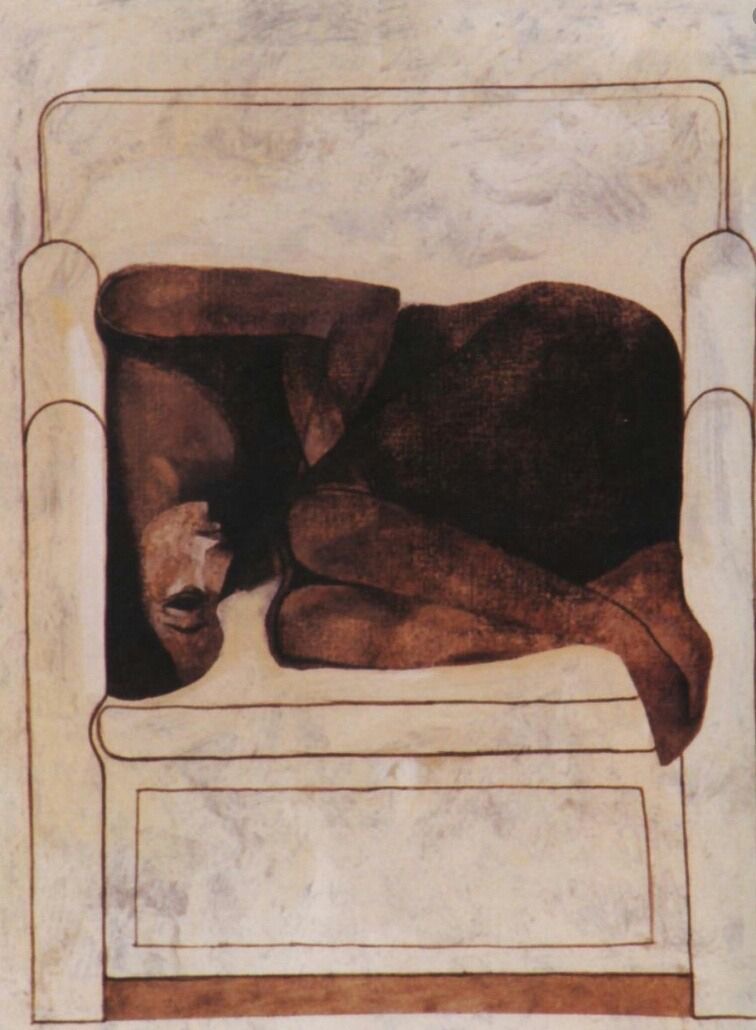
Title Unknown by Safwan Dahoul